Turks and Caicos Flag: Conch Shell, Lobster & Cactus Meaning
A conch, spiny lobster and Turk’s head cactus make the Turks and Caicos flag recognizable. See what the three symbols represent and how the flag differs from nearby territories.
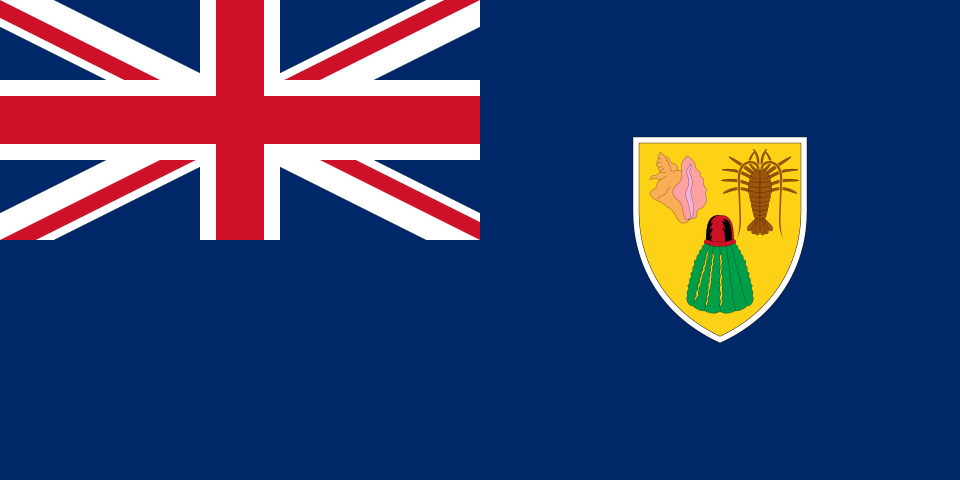
The Turks and Caicos Islands are a British Overseas Territory southeast of the Bahamas. Their flag has the British blue-ensign format but is easily distinguished by the yellow shield with three recognizable objects.
The UK Government identifies the conch shell, lobster and Turk’s head cactus, while Visit Turks and Caicos Islands’ historical reference provides details of the flag’s development.
Turks and Caicos Islands flag at a glance
| Feature | Details |
|---|---|
| Territory | Turks and Caicos Islands |
| Status | British Overseas Territory |
| Capital | Cockburn Town, Grand Turk |
| Main field | Dark blue |
| Canton | Union Jack |
| Fly emblem | Yellow shield |
| Three symbols | Queen conch, spiny lobster, Turk’s head cactus |
| Flag style | British Blue Ensign |
These are the established elements of the territorial flag. The distinction between a flag, its coat of arms and the historic events represented on the arms is important when assigning dates and meanings.
What does the Turks and Caicos flag look like?
A dark blue rectangle carries the Union Jack at its upper-left corner. A bright yellow shield is displayed toward the right. The shield has a pinkish conch shell, a spiny lobster and a small cactus.
No large constellation or crown appears on the ordinary flag. The local shield is what makes this territory distinguishable from the Cayman Islands, whose badge includes stars, a turtle and a pineapple.
What does the conch shell represent?
The queen conch is a marine mollusc long associated with Turks and Caicos fisheries and island food traditions. Its large shell is recognizable in coastal Caribbean imagery and is depicted on the flag’s yellow shield.
The conch emblem refers to local marine life and resources rather than a treasure chest or purely decorative seashell. The official flag does not depict a pearl inside it, and artists should not replace the distinctive shell with an arbitrary scallop.
Why is there a spiny lobster on the flag?
The Caribbean spiny lobster reflects the islands’ marine environment and fishing heritage. A red-orange lobster appears on the shield, providing a contrasting natural symbol alongside the conch.
The lobster is not an insect, a land crab or a military insignia. In a very small illustration its legs and antennae can be difficult to see, so a caption identifying the animal adds genuine value to a flag-explanation article.
What is the Turk’s head cactus?
The Turk’s head cactus is a barrel-shaped cactus associated with the islands’ name. Its rounded form has a distinctive caplike top that was compared with a Turkish fez or turban in historical naming explanations.
The Turks and Caicos Government’s history page links the ‘Turks’ portion of the islands’ name with the cactus. The plant is not a palm tree or a pile of salt; it is a recognizable local botanical emblem.
Does the flag explain the Turks and Caicos Islands’ name?
The cactus provides a visible link to the ‘Turks’ part of the place name. The ‘Caicos’ element is often connected with a Lucayan expression commonly translated as a ‘string of islands’, although historical etymologies can involve uncertainty.
Only the cactus is on the flag itself. No words naming the territory or explaining the etymology are written across the shield. The conch and lobster highlight resources and the surrounding waters rather than the origin of the name.
When did the territory adopt its present flag?
The modern Blue Ensign with a local shield developed during the twentieth century as British territory badges were standardized. The familiar three-object shield is associated with the coat of arms granted in 1965, and the flag is commonly dated to 1968.
Some older records show different arrangements or earlier badges. When researching the historical timeline, distinguish the coat-of-arms grant, first design and later flag standardization instead of assigning every illustration the same date.
Is the flag the same as the full coat of arms?
No. The flag displays the yellow shield with the three natural symbols. The complete coat of arms also includes additional devices, notably two flamingo supporters and a pelican crest.
Adding these flamingos and the pelican to the regular flag would change its appearance. Use the simple yellow shield when depicting the national territorial flag; refer to the full arms when discussing official heraldry separately.
Turks and Caicos vs Cayman and British Virgin Islands
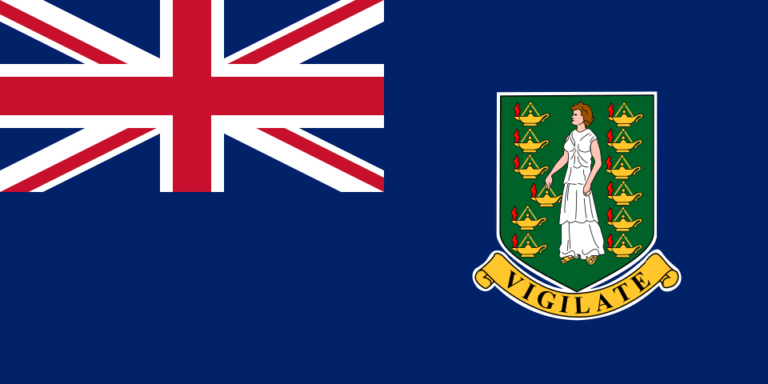
All three have British blue-ensign flags, but the badges differ. Turks and Caicos uses a yellow shield with a conch, lobster and cactus. Cayman Islands shows a lion, stars, turtle and pineapple. British Virgin Islands depicts Saint Ursula and oil lamps.
The local badge—not the Union Jack canton—is the quickest way to identify each flag. This is especially useful for students working with small flag images.
Frequently asked questions
What three objects are on the Turks and Caicos flag?
A queen conch shell, a Caribbean spiny lobster and a Turk’s head cactus.
Why is there a cactus on the flag?
The Turk’s head cactus is linked with the name of the Turks Islands.
What does the lobster mean?
It refers to the surrounding marine environment and fishing traditions.
Is the conch shell a pearl oyster?
No. It depicts a queen conch shell.
Is there a Union Jack on the flag?
Yes, in the upper hoist canton.
Where are the Turks and Caicos Islands?
In the Atlantic and Caribbean region, southeast of the Bahamas.
What is the capital?
Cockburn Town on Grand Turk.
Does the flag show flamingos?
No. Flamingos are part of the full coat of arms, not the ordinary flag’s yellow shield.
Official references and illustration credits
GOV.UK — Turks and Caicos Islands flag
Visit Turks and Caicos Islands — Flag history
Turks and Caicos Government — Historical background
Flag Institute — Turks and Caicos flag
This PNG is a rendered version of the Wikimedia Commons vector for the Turks and Caicos Islands flag. See the source file page for the author’s licence or public-domain statement, plus any special requirements for governmental insignia. The image is included for educational identification and does not imply official endorsement.
Flag descriptions and historical notes reviewed November 2026.