Oklahoma State Flag: Osage Shield & Peace Symbols
The current Oklahoma state flag explained with a clear picture, historical context, design details and tips for identification.
Oklahoma state flag at a glance
| Detail | Answer |
|---|---|
| State | Oklahoma, United States |
| Adoption and updates | 1925; name added in 1941 |
| Key feature | Osage shield, olive branch and peace pipe |
| Image source | Flagpedia / Wikimedia Commons |
What does the Oklahoma state flag look like?
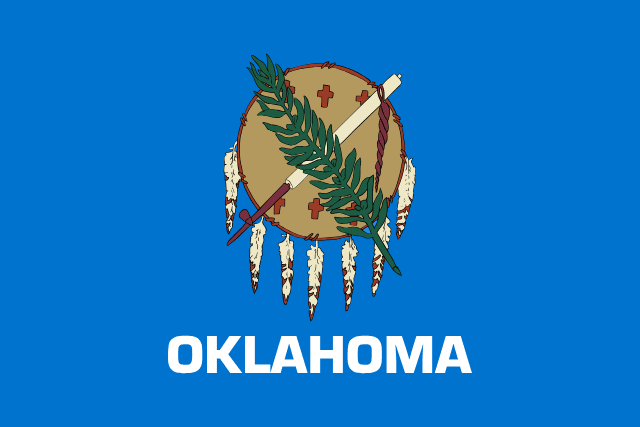
Oklahoma’s flag has a sky-blue background with an Osage warrior’s shield at its center. The circular buckskin shield carries seven hanging eagle feathers and small crosses. A peace pipe and olive branch are arranged across the shield; OKLAHOMA is written in white capitals below.
What do the symbols on Oklahoma’s flag mean?
The shield refers to Native American heritage, while the calumet or peace pipe and olive branch are commonly explained as emblems of peace among Indigenous peoples and settlers. The blue field recalls a Choctaw battle flag. The seven hanging feathers and crosses distinguish the central device from a generic state seal.
The most important details to notice
Calling the shield a round state seal is incorrect. It is specifically patterned on an Osage shield. The crossed pipe and olive branch, seven feathers and state name are the best features to inspect when checking a flag illustration.
When was the Oklahoma flag adopted?
An early red state flag featuring a central star was replaced after a design competition. Louise Funk Fluke won with the shield motif, adopted in 1925. The word OKLAHOMA was added below the shield in 1941; later measures clarified the colors, culminating in statutory specifications in 2006.
Why this design matters to Oklahoma’s history
Oklahoma’s central motif recognizes the cultural history of Indigenous peoples of the state. The Osage shield is not an arbitrary circular decoration: its feathers and painted marks form part of the design. A peace pipe and olive branch together present a message of peace across communities. This interpretation is more accurate than describing the center as the state seal, which is a different official image.
Colors, proportions and how to draw the flag
Start with a pale blue field, place the round shield in the center, then add seven feathers hanging from its lower edge. Cross the peace pipe and olive branch on the shield and finish with OKLAHOMA in white beneath. The state seal with a large five-pointed star is a different emblem.
For a classroom printout, keep the original aspect ratio of the official image instead of stretching it to fill a convenient box. Use a high-resolution or vector-derived source for detailed emblems. Commercial reproductions and governmental displays may require stricter specifications than educational illustrations, particularly where colors, lettering, dimensions or the seal artwork are defined by law.
How to identify Oklahoma in a state-flag quiz
At a distance, the white OKLAHOMA lettering may be the first feature visible below a round brown emblem. Look for the shield’s seven suspended eagle feathers and the crossed elements on its face. The background is a pale blue, not the dark navy typical of many other states. Oklahoma’s 1925 design did not originally include the state name, so that detail helps date older examples.
How is Oklahoma’s flag different from other U.S. state flags?
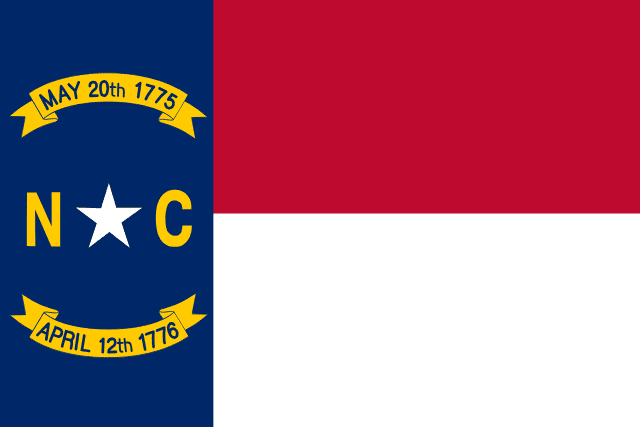
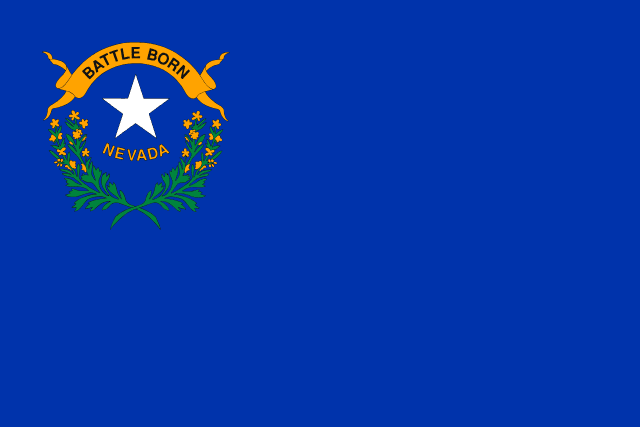
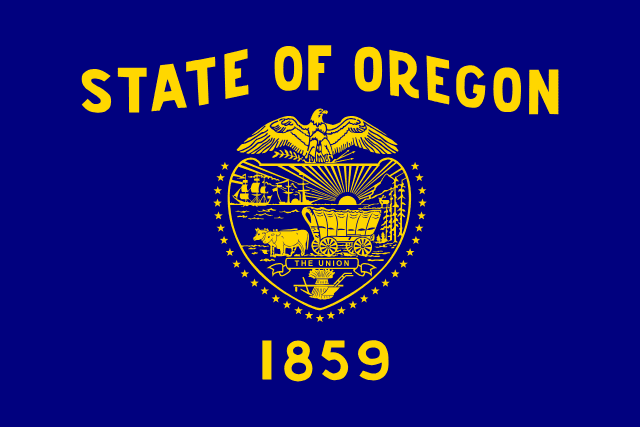
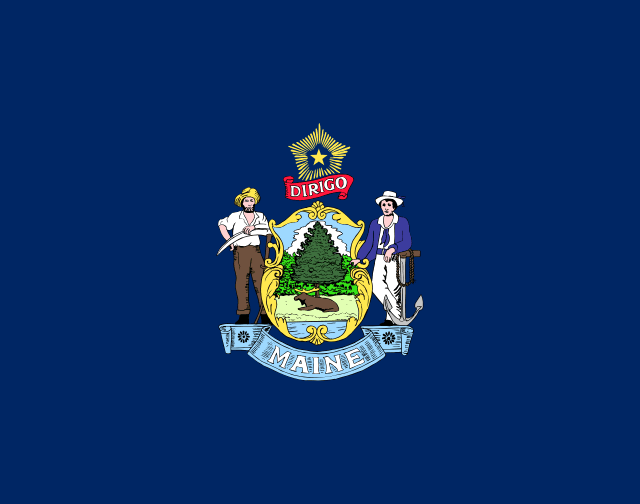
Oklahoma’s flag is visually distinct from Arkansas’s red field and white diamond, despite their neighboring geography. Kansas uses a dark-blue field and a sunflower above a large state seal; Oklahoma uses a war shield and peace symbols instead. New Mexico’s Zia sun symbol is another state emblem drawing on Indigenous imagery, but it appears as a red geometric sun on yellow rather than a detailed shield.
Quick study notes and common mistakes
For a worksheet, label the Osage shield and cross-placed pipe and olive branch separately instead of calling the entire design ‘a brown circle.’ The state name was added in 1941, after the original 1925 adoption. If comparing Indigenous symbols across flags, distinguish their different cultural origins and avoid assuming one symbol speaks for every Native nation.
Frequently asked questions
When was the Oklahoma state flag adopted?
1925; name added in 1941
What is the most recognizable symbol on Oklahoma’s flag?
Osage shield, olive branch and peace pipe.
What do the main emblems mean?
The shield refers to Native American heritage, while the calumet or peace pipe and olive branch are commonly explained as emblems of peace among Indigenous peoples and settlers. The blue field recalls a Choctaw battle flag. The seven hanging feathers and crosses distinguish the central device from a generic state seal.
Is the flag pictured here the current flag?
Yes. The image depicts the present official design as shown by the referenced flag illustration source. Historical or proposed alternatives are discussed separately when relevant.
Where can I find all 50 current state flags?
The FlagExplorers all 50 U.S. state flags gallery provides images, names and links to individual state guides.
Oklahoma Historical Society — State Symbols
Oklahoma Historical Society — State Flags
Flagpedia — U.S. state flag illustrations
Flag artwork sourced from FlagCDN/Flagpedia, based on Wikimedia Commons vector graphics and reproduced in the FlagExplorers library. Information reviewed November 2026.