History of the Argentina Flag: Manuel Belgrano, 1812 & the Sun of May
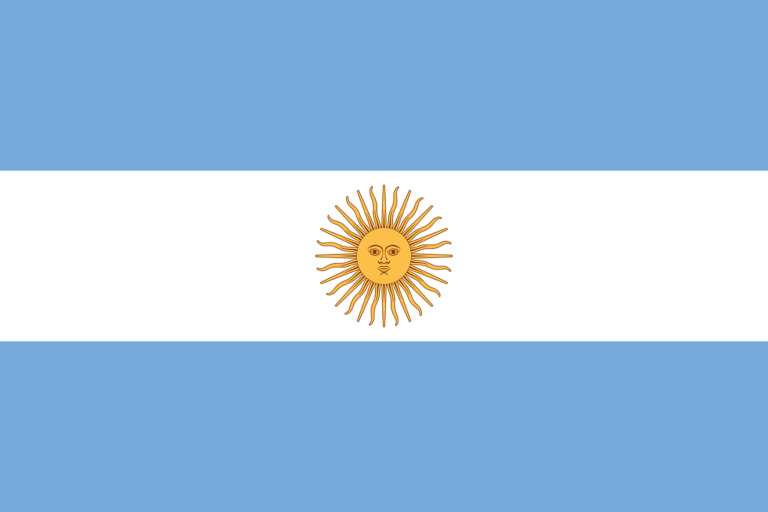
Argentina’s light-blue-and-white flag dates to Manuel Belgrano in 1812. It became an official national emblem during independence and gained the Sun of May in 1818.
1812: Manuel Belgrano creates the flag
Manuel Belgrano created the Argentine flag on February 27, 1812 near Rosario, on the Paraná River.
Why light blue and white?
The flag used the light-blue-and-white colors already associated with the independence movement. These colors became central to Argentine national identity.
1816: legal recognition
After independence, the Congress of Tucumán formally recognized the light-blue-and-white flag as a national emblem on July 20, 1816.
1818: the Sun of May is added
On February 25, 1818, the sun emblem was incorporated into the central white band for the national flag.
What does the sun represent?
The Sun of May is associated with the May Revolution of 1810 and also draws on imagery linked with Inti, the Inca sun deity.
Modern standardization
Argentina’s Decree 1650/2010 standardized measurements, textile characteristics, colors and accessories for official flags, building on earlier national-symbol legislation.
Flag Day
Argentina observes June 20 as Flag Day in memory of Manuel Belgrano.
Timeline
| 1812 | Belgrano creates the flag |
|---|---|
| 1816 | Light blue and white recognized nationally |
| 1818 | Sun of May incorporated |
| 2010 | Modern technical standards formalized |