History of the Colombia Flag: Miranda, Gran Colombia & the Modern Tricolour
Colombia’s yellow-blue-red flag belongs to a wider South American tricolour tradition associated with Francisco de Miranda and the former republic of Gran Colombia.
Francisco de Miranda and the tricolour tradition
The yellow-blue-red combination is closely associated with independence leader Francisco de Miranda. His tricolour ideas influenced flags used during the independence movements of northern South America.
Gran Colombia
After independence, the Republic of Colombia—commonly called Gran Colombia—used yellow, blue and red as a unifying flag tradition across territory that included present-day Colombia, Venezuela, Ecuador and Panama.
After Gran Colombia dissolved
When Gran Colombia broke apart in the nineteenth century, Colombia retained the yellow-blue-red family of colors. Venezuela and Ecuador also preserved related tricolours, which is why the three national flags still resemble one another today.
The modern Colombian layout
Colombia’s flag uses an unusual band proportion: yellow takes up the entire upper half, while blue and red each occupy one quarter. This 2:1:1 structure makes the yellow band visually dominant.
Modern legal regulation
National-symbol legislation regulates the form and use of the Colombian flag. The Ministry of Foreign Affairs describes the flag together with the coat of arms and anthem as core patriotic symbols.
How Colombia differs from Ecuador and Venezuela
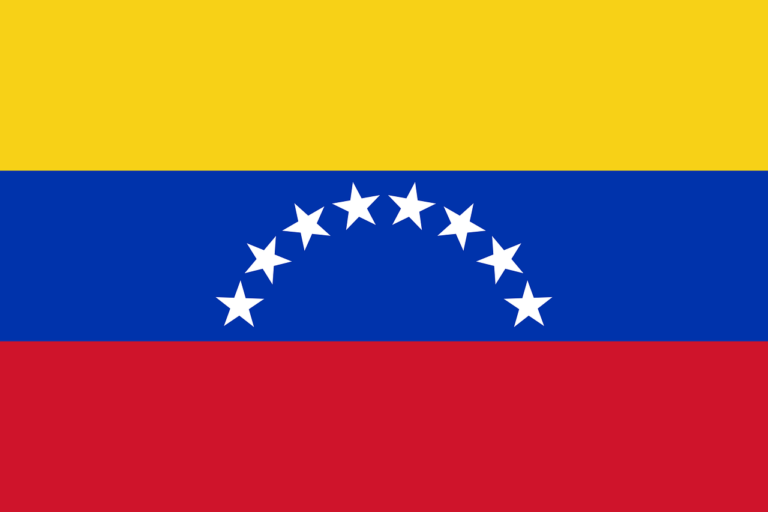
All three share the yellow-blue-red tradition, but Colombia’s ordinary national flag has no stars or coat of arms. Venezuela uses eight white stars, while Ecuador’s state flag commonly carries its coat of arms.
Why the flag matters historically
The flag therefore tells two stories at once: Colombia’s individual national identity and its historical connection to the independence movements and political unions of northern South America.