Graubünden Flag: Black Ibex and Three Leagues Explained
What does the flag of the canton of Graubünden represent? Its design, historical symbols, colours and differences from nearby canton flags explained.
Graubünden is Switzerland’s largest canton by area, in the eastern Alps, with Chur as capital. It is distinctive for its Romansh, German and Italian language communities. The flag’s symbolism is explained below, including the older heraldic traditions and simple visual clues that distinguish it from other Swiss cantonal banners.
Graubünden flag at a glance
| Canton | Graubünden, Switzerland |
|---|---|
| Local name | Graubünden / Grisons / Grischun |
| Capital or centre | Chur |
| Flag tradition | Current combined canton arms adopted in 1933 |
| Main feature | A black Alpine ibex, together with patterns representing the historic Three Leagues. |
| Typical shape | Square |
Flag description and design
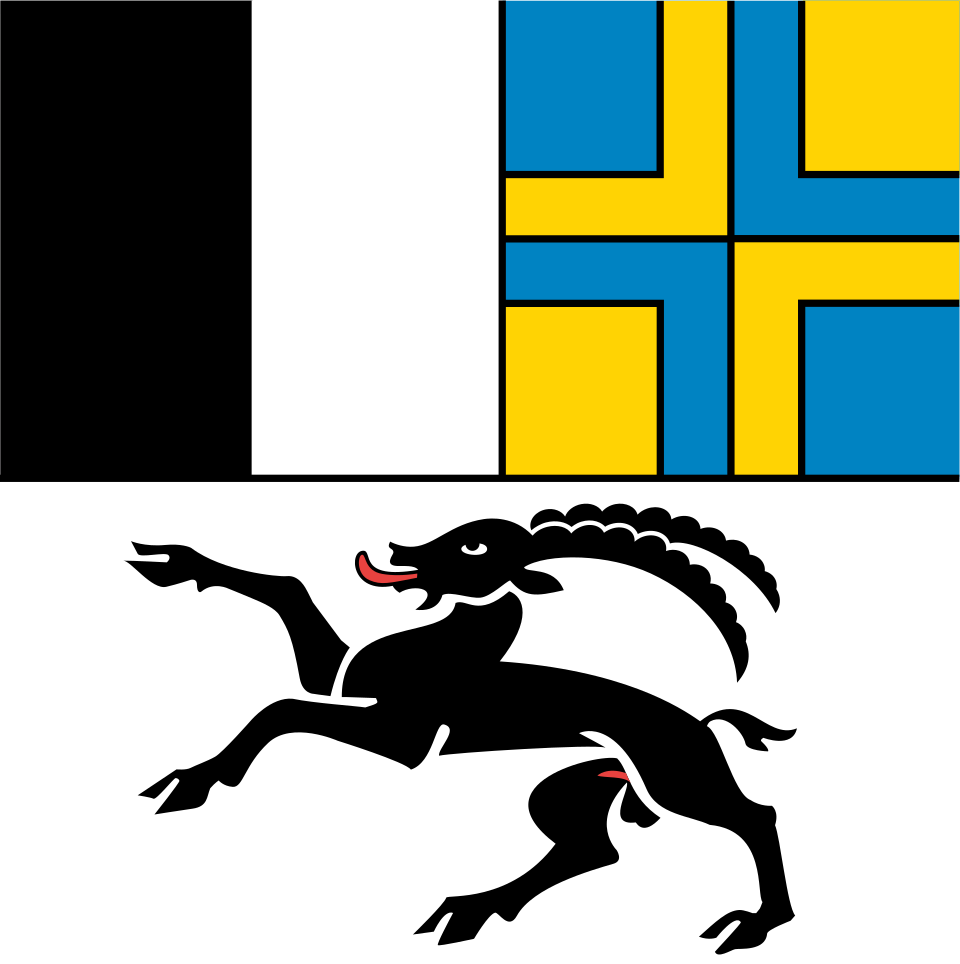
The Graubünden cantonal flag combines three heraldic areas: black and white vertical halves, a blue-and-gold quartered cross pattern, and a black Alpine ibex standing on a white field. It is among the most complex Swiss canton flags.
Swiss cantonal flags are usually square, and the orientation of their heraldic elements matters. A cropped shield or elongated stock graphic is not always a correct replacement.
Meaning of the main symbol
The three parts represent the Grey League, the League of God’s House and the League of the Ten Jurisdictions, historic alliances from which Graubünden developed. The black ibex, an Alpine mountain goat, is tied to the League of God’s House.
The name Graubünden means Grey Leagues, while Grisons and Grischun are French and Romansh forms of the canton name. All refer to the same canton and flag, not separate countries.
Meaning of the colours
Black, white, blue and gold make a distinctive multi-part composition. The ibex adds a geographic and heraldic connection to mountain Switzerland without replacing the original Three Leagues’ political symbolism.
Colour descriptions should distinguish established heraldic facts from later popular interpretation. This guide does not assign invented meanings to minor details.
When did the flag originate?
The medieval and early modern Three Leagues gradually established a common political identity. Graubünden became a Swiss canton in 1803; the modern composite coat of arms and flag were adopted in 1933.
Modern cantonal status and the beginnings of a particular emblem can fall in different centuries; both are explained separately here.
Location and regional identity
Graubünden is Switzerland’s largest canton by area, in the eastern Alps, with Chur as capital. It is distinctive for its Romansh, German and Italian language communities.
Local names include Graubünden / Grisons / Grischun. The cantonal seat or capital is Chur.
How to distinguish similar canton flags
Schaffhausen uses a black ram on yellow; Graubünden shows a black ibex as one part of a three-section composite design. The ibex is not the same animal as Uri’s bull or the Appenzell bears.
For comparisons, use the number of symbols, their posture, their colour and the orientation of the divided field before relying on the canton name alone.
How to draw and identify the flag
The Graubünden cantonal flag combines three heraldic areas: black and white vertical halves, a blue-and-gold quartered cross pattern, and a black Alpine ibex standing on a white field. It is among the most complex Swiss canton flags.
Trace the original heraldic details using the cited square vector design where precision matters; especially avoid substituting a different crozier, key, bear or Alpine animal.
Frequently asked questions
What animal appears on Graubünden’s flag?
A black Alpine ibex, together with patterns representing the historic Three Leagues.
What is the canton capital or seat?
Chur.
When was this flag introduced?
Current combined canton arms adopted in 1933.
Is Graubünden a separate country?
No. It is one of the 26 cantons of Switzerland, each with its own cantonal identity and institutions.
Is its flag the same as the flag of Switzerland?
No. Switzerland’s national flag is a centred white cross on red. This canton has its own distinct design.
Are canton flags square?
Yes, square cantonal banners are the traditional Swiss flag format. Shield-shaped depictions of the arms are related but not identical illustrations.
Sources and image credit
History of Swiss cantonal flags and coats of arms
Swiss canton arms — cantonal legal specifications and links
Wikimedia Commons: Flag of Canton of Graubünden.svg. Illustration imported as a scaled PNG. Swiss public-law heraldic insignia are generally listed as public-domain official works, but use of official arms can carry restrictions separate from copyright; check the original file entry for exact status.
Learn about Switzerland’s national flag, which has a centred white cross on red.
Independent educational page; not endorsed by cantonal authorities. Research reviewed 20 November 2026.