History of the Bhutan Flag: 1947 Origins, 1956 Changes & 1972 Rules
Bhutan’s dragon flag developed during the twentieth century before its modern form was formally regulated by the National Assembly in 1972.
1947: an early national flag
Bhutanese government material credits Mayum Choying Wangmo Dorji with designing an early national flag in 1947.
1956: the design changes
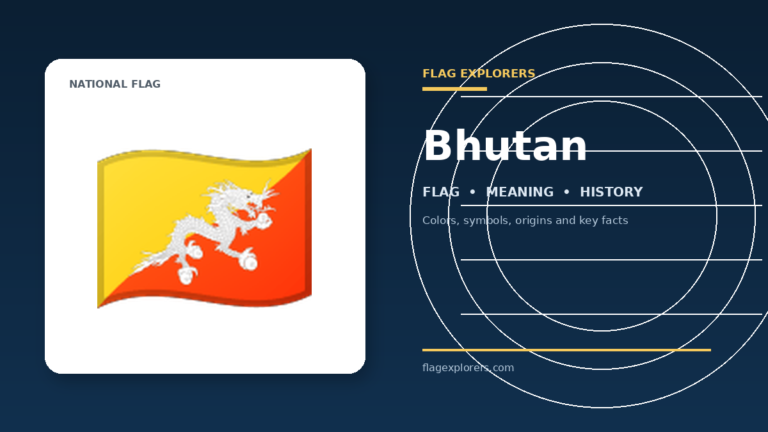
The flag underwent a major redesign in the 1950s. The dragon became more prominent and the overall design moved closer to the modern diagonal format.
Why yellow and orange?
The final color scheme places yellow on the upper section to represent secular authority and the monarchy, while orange represents Bhutan’s spiritual tradition and Buddhism.
1972: National Flag Rules
On June 8, 1972, Bhutan’s National Assembly endorsed rules formally describing the national flag and its symbolism.
2008 Constitution
Bhutan’s Constitution later incorporated the flag description into its First Schedule, giving the symbolism of the yellow and orange fields and white dragon constitutional status.
Why the dragon stayed central
The Druk represents Bhutan’s own name for the country—Druk Yul, Land of the Thunder Dragon. Keeping the dragon across both halves of the flag visually unites spiritual and secular traditions.
Timeline
| 1947 | Early flag designed by Mayum Choying Wangmo Dorji |
|---|---|
| 1956 | Major redesign |
| 1972 | National Flag Rules adopted |
| 2008 | Flag symbolism included in Constitution |